Laminitis in Horses: Causes, Symptoms, Treatment & Feeding Tips
What is Laminitis in Horses? Understanding This Painful Hoof Condition
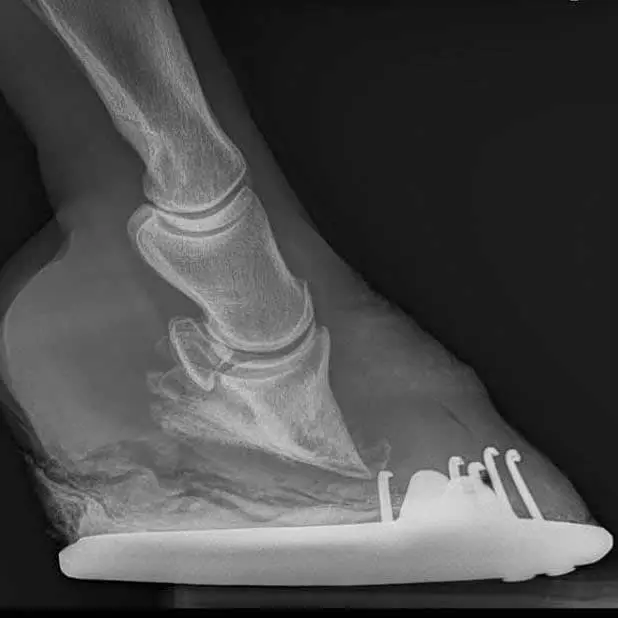
Laminitis in horses is an excruciatingly painful and debilitating condition of the tissues (laminae) that bond the hoof wall to pedal bone. The laminae become inflamed which can lead to detachment of the laminar bonds. In severe cases, this can result in rotation and/ or ‘sinking’ of the pedal bone through sole of the foot. Unfortunately, laminitis is often recurrent for individual horses.
There have been massive steps forward in the study of laminitis in the last 15 years and what has become very clear is that although the clinical signs might be the same, there is more than one cause of laminitis. Laminitis is not a disease itself but rather a symptom. Any laminitic episode should be thoroughly investigated by your vet for its root cause.
Common Signs and Symptoms of Laminitis in Horses and Ponies
- Difficulty walking especially when turning sharply or walking on hard or gravel surfaces
- Shifting weight between feet when resting
- Hooves feel hot to touch
- Increased strength and rate of the digital pulse – can you feel your horse’s digital pulse?
- Pain with use of hoof testers at the point of frog on the foot
- The horse may lean back to take weight from the front feet
Main Causes of Laminitis in Horses
Sepsis-Related Laminitis: Illnesses that Trigger Hoof Pain
Horses suffering from severe systemic illness as a result of certain types of colic, colitis, retained placenta, severe pneumonia or starch overload are all at increased risk of laminitis. This is because these conditions all result in the absorption of toxins into the blood, which have far-reaching effects in the laminae of the hoof.


Supporting Limb Laminitis: How Overloading a Limb Affects the Hoof
Horses can get laminitis from a mechanical overloading of the limb. Typically, this is associated with a fracture or infected joint on one leg, resulting in an increased risk of laminitis in the hoof of another limb, more commonly the opposite leg which is bearing more of the weight.
Endocrine Laminitis: Insulin Resistance, EMS & Cushing’s Disease
Hormonal disorders such as insulin resistance, Equine Metabolic Syndrome (EMS) and Cushing’s disease (pituitary pars intermedia dysfunction; PPID) all increase the risk of laminitis. This is the most common cause of laminitis; up to 90% of laminitis cases are a result of an underlying hormonal disease. Diet can be a trigger factor for laminitis in horses, particularly those with metabolic/ endocrine disorders.


Drug-Induced Laminitis: Corticosteroids and Other Triggers
Certain drug administration like corticosteroids have been know to cause laminitic episodes.
How Hormonal Disorders Increase Laminitis Risk in Horses
In healthy horses the hormone insulin, which is produced by the pancreas, manages the absorption of glucose into the bloodstream. As non-structural carbohydrates (NSCs like sugar and starch), are broken down into glucose in the small intestine by insulin released from the pancreas. This glucose is then used by cells (e.g. muscles) for energy, or moves to stores for later use (e.g. as muscle glycogen or body fat). Insulin is therefore key to maintaining a consistent blood glucose level.


Insulin Dysregulation and Hyperinsulinemia Explained
Metabolic/endocrine disorders such as Equine Metabolic Syndrome (EMS) can cause the body to have an abnormal response to non-structural carbohydrates. It occurs when the body’s cells start to resist or ignore the signals insulin is trying to send, this is known as insulin dysregulation (ID). As a result, the pancreas makes more insulin to help glucose enter the cells, causing too much of the hormone to be released into the blood (hyperinsulinaemia). ID is also frequently seen in horses suffering from PPID (Cushing’s disease).
PPID and Metabolic Disorders: What Horse Owners Should Know
We don’t yet know exactly why IR can result in laminitis, or how PPID and IR may be inter-related, although there are a number of different theories currently being investigated. Hyperinsulinemia can cause high cortisol levels that causes inflammation in the laminae.
Preventing Laminitis Through Weight Management and Body Condition
The link between obesity and the development of ID is a long-term one and it is likely to become a problem if the obesity persists!
Maintaining Ideal Body Condition Scores
You must get your horse’s body fat down to no greater than a body condition score of 3 (0-5 modified score). Remember that horses have evolved to put on fat through the spring and summer BUT then lose it through the winter. Find out more on assessing your horse’s body condition score here.
Building Muscle vs. Gaining Fat
Fat and muscle are different tissues. If your horse has a ‘weak outline’ don’t try and improve it by allowing them to gain excessive weight, instead work on their exercise regime so that they build up a good outline through developing muscle.


Exercise Strategies to Reduce Laminitis Risk in Horses
Try to ensure that your horse gets a minimum of 1/2hr active walking per day. If your horse has active laminitis and is lame, this is obviously not advised until your horses is comfortable. Once he/she is sound again and the laminitis is under control, an exercise regime should be initiated.
Forage Selection: Reducing Sugar and Calorie Intake
DO NOT STARVE – It is important not to restrict a horse’s dry matter intake too much as this will increase the risk of oral stereotypies (e.g. cribbing), colic and gastric ulcers. Severely restricting your horse’s food intake can also result in a life-threatening condition called hyperlipemia.
If your horse is overweight, try to choose a late cut mature stemmy hay as this will contain the lowest level of calories. If you have any doubt, your forage should be analysed for its sugar levels which can be done very easily. Soaking the hay can reduce its sugar and calorie content further.


Does Soaking Hay Help Laminitic Horses? Pros & Cons
Whilst is it generally accepted that soaking hay overnight reduces the sugar levels, the results can vary and therefore soaking cannot guarantee suitability for a laminitic horse. It’s also worth noting that if soaking hay in very hot weather the ‘soak’ time should be no longer than 6 hours, in order to limit the risk of bacterial overgrowth. Care should be taken when disposing of the ‘soak’ water, as it will contain some nitrites, which may have a detrimental effect on the environment. You can contact one of our nutritional team to give you tips on how to soak your forage to best fit you and your horse’s needs.
Using Low-Calorie Forage Alternatives Like Straw
If necessary, and provided your horse’s teeth are in good condition, you can replace up to a maximum of 30% of their hay ration with oat or barley straw. This will provide a low calorie source of fibre. However, straw generally should not be used as the sole forage source, as the protein content is very low and the fibre particularly indigestible, which can contribute to impaction colic in susceptible horses.


Monitoring Grass Intake in Laminitis-Prone Horses
Grass is NOT to be considered as ‘fresh air’ for your horse, lush grass can contain high levels of calories and more importantly high levels of non-structural carbohydrates (e.g. sugar and fructans). You can contact one of our nutritional team to give you tips on how to soak your forage to best fit you and your horse’s needs.
If your horse is a ‘good-doer’ or suffers from ID / EMS, it is important that you restrict their grass intake, particularly during the spring and summer.
There are various ways to help you reduce grass intake (see opposite). Each method has its own pros and cons and we recommend speaking to our team of expert nutritionists who will help you choose the most appropriate system for your individual circumstances.
- Use of a grazing muzzle
- Strip Grazing
- Track Grazing/Paradise Paddock
- Turning out on a bare/sparse paddock
- Co-Grazing with Sheep
- Mowing and removing the grass
- Reducing time out at pasture
- Increasing the stocking density


Horse Feed Balancers to Support Laminitis-Prone Horses
If fed in excess, calories, regardless of source (e.g. starch, fat etc), will result in excess weight gain. If your horse can maintain the correct body weight on forage alone they will not need large amounts of hard feed. Instead, consider feeding a nutrient-dense horse feed balancer or an equine multi-vitamin and mineral supplement to ensure your horse’s diet is fully balanced. Connolly’s RED MILLS PerformaCare Balancer or Foran Equine Chevinal Liquid , our horse vitamin and mineral supplement will allow you to provide key micronutrients, without unwanted calories and/or sugars and starches. Forage alone won’t sufficiently balance the diet so a low calorie balancer can be a great way of providing optimal nutrition without adding extra calories to the diet.
Low Starch Horse Feeds Can be Suitable For Horses Prone to Laminitis who need Additional Calories
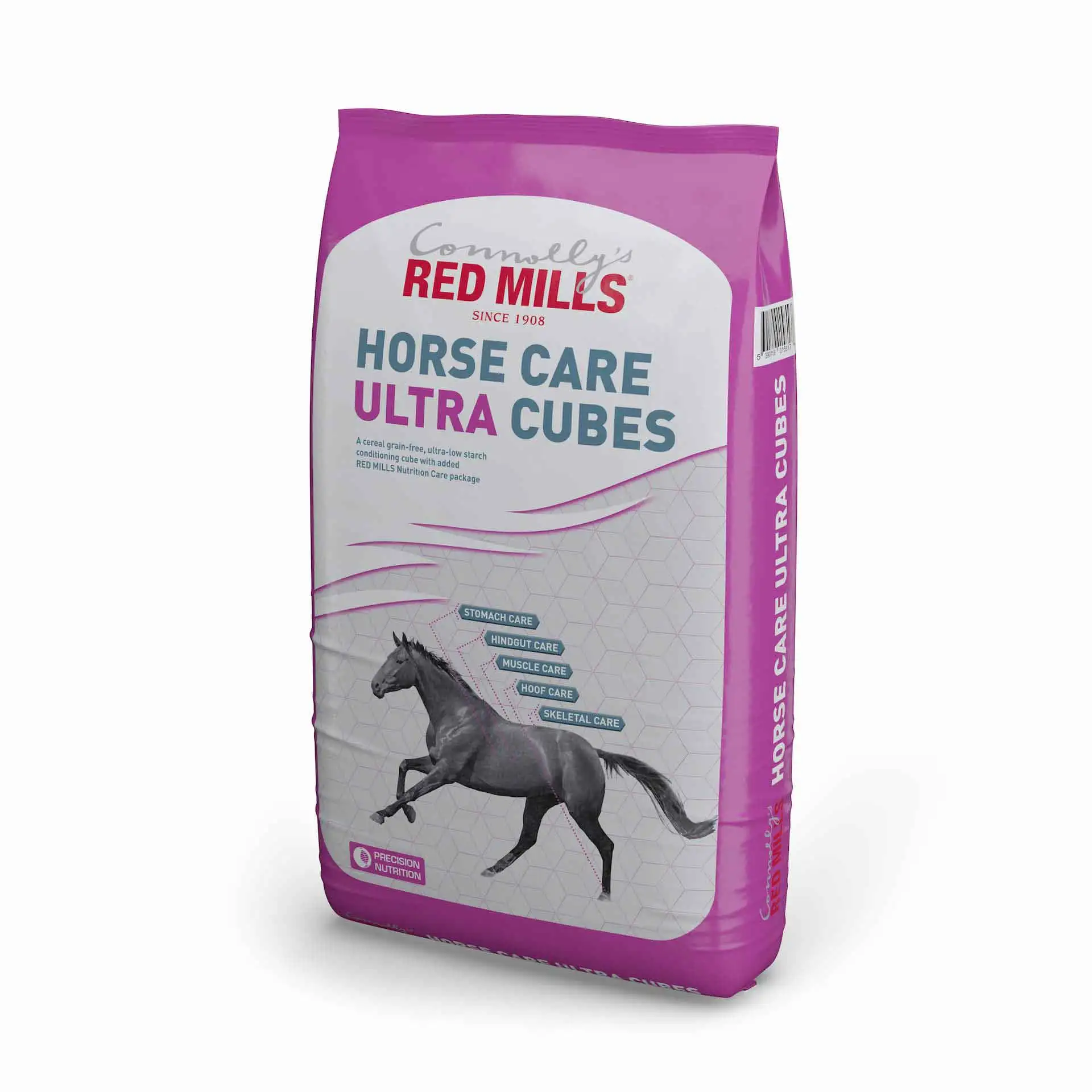
If your horse does not maintain weight on forage and a horse balancer/vitamin and mineral supplement, you could consider a low starch horse feed such as Connolly’s RED MILLS Horse Care ULTRA Cubes or Connolly’s Red Mills Horse Care Mash. These low sugar and starch feeds are designed to provide calories from fibre and oil and can be used for horses with laminitis and/or PPID, but who need additional calories.
Meal size should be kept to less than 400g/100kg bodyweight. Feeding horses little and often, as nature intended, can control their insulin release. Large meals will result in a higher insulin response so trickle feeding is optimal in these laminitis prone horses.