Your FAQs on Horse Care Mash
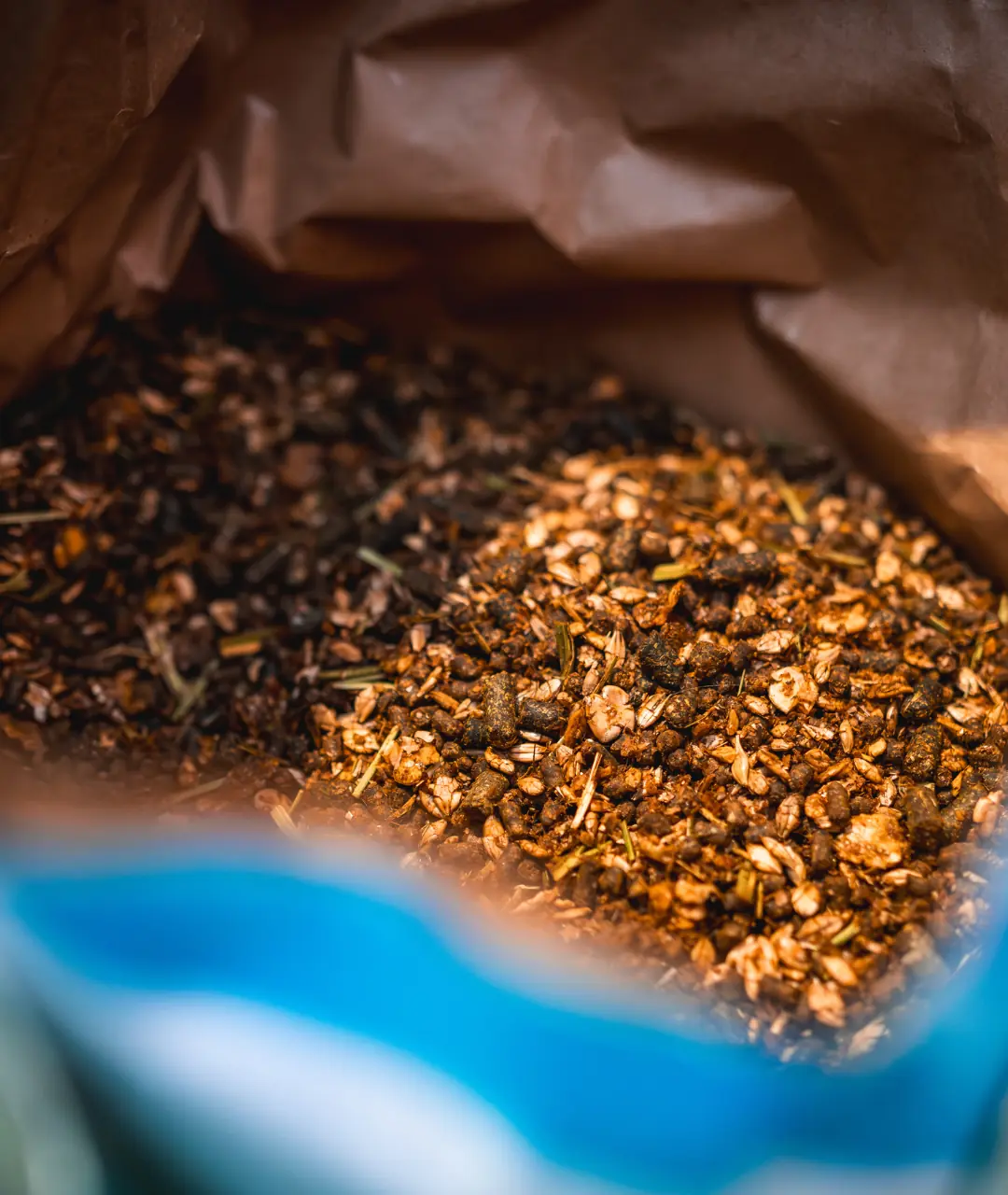
A cereal grain free, high fibre conditioning mash. Ideal for horses needing a low starch diet, including those prone to gastric ulcers. Alongside a fully balanced vitamin and mineral package, Horse Care Mash also contains additional beneficial additives including therapeutic levels of biotin, vitamin C to aid immune function, prebiotics and probiotics to support hindgut health, chelated minerals and organic selenium for optimum adsorption, and a natural gastric acid buffer to support stomach health.
Horse Care Mash is a highly palatable, low starch, and cereal-grain free conditioning mash.
Many low starch mashes still contain cereals such as maize, oats or barley. Horse Care Mash is completely cereal grain free; it’s one of the lowest starch, nutritionally balanced mashes available. It also doesn’t contain any by-products such as wheatfeed, oatfeed, or nutritionally improved straw. Instead, we use highly digestible fibres such as alfalfa and beet pulp.
Another major difference is that Horse Care Mash contains our wonderful Nutrition Care package which includes yeast, two prebiotics, a natural long-lasting gastric buffer, elevated levels of antioxidants plus therapeutic levels of biotin. This unique combination of ingredients helps to support your horse’s gastrointestinal function, promotes hoof condition and supports immune health and recovery post-exercise.
Yes, unlike some other mashes, Horse Care Mash is fully fortified with essential micronutrients, including chelated minerals. This means, when fed at the recommended levels, it is nutritionally balanced and therefore can be fed as the main daily feed. Equally, it can be mixed in with other feeds without causing dietary imbalances.
Yes, Horse Care Mash contains a complete vitamin and mineral package as well as our unique Nutrition Care package which provides numerous beneficial ingredients to support your horse’s overall health and well-being.
Yes, Horse Care Mash has been formulated so that it can be mixed in with other RED MILLS feeds without causing dietary imbalances.
We recommend soaking it for 15 minutes before feeding it to your horse.
Ideally use warm (not boiling) water to soak Horse Care Mash. Cold water can be used but this may mean it takes a little longer to reach the desired consistency.
There are so many benefits to feeding a mash from stimulating appetite in fussy eaters and helping to support hydration during summer. Read more about how your horse could benefit from a mash here.
Horse Care Mash is an exceptionally versatile feed and can be used as the main feed or as an addition to the diet. It is suitable for a wide range of horses and ponies from those that travel or compete regularly to older retirees. In fact, any horse that needs a conditioning, yet low starch diet, will benefit from being fed Horse Care Mash.
The main difference between Horse Care Mash and Comfort Mash is that Horse Care Mash is cereal grain free and therefore much lower in starch. Another key difference is that Horse Care Mash contains our Nutrition Care package.
Compared to other nutritionally balanced mashes Horse Care Mash has one of the lowest starch contents. With no added cereals it contains just 7% starch.
Horse Care Mash is low in starch and sugar and is cereal grain free. It is suitable for horses and ponies suffering from, or prone to laminitis or Cushing’s, that need support gaining or maintaining condition.
Horse Care Mash contains 7% starch and is suitable for horses prone to gastric ulcers or other digestive upsets. The guidelines state that when managing a horse with digestive issues, the diet should contain less than 2g of starch per kg bodyweight per day and 1g per kg bodyweight per meal. So, for an average 500kg horse, you would be looking to keep the starch content per meal at less than 500g and the total daily starch intake per day should be less than 1,000g. When feeding 1kg of Horse Care Mash twice a day your horse would receive just 70 grams or starch per meal and 140 grams of starch per day so well below the guidelines.
This means that Horse Care Mash certified according to BETA Feed Approval Mark for feeds suitable for horses and ponies prone to gastric ulcers and has undergone a stringent three-stage application process, which includes the examination of ingredients, labelling, marketing claims and independent laboratory analysis. Certificates are only issued for feeds that are particularly low in sugar and starch and therefore suitable to feed, as part of a balanced diet, to horses and ponies prone to gastric ulcers
Feeding Horse Care Mash helps to increase water intake and aids hydration, it also contains added electrolytes. This can be particularly beneficial in the warmer summer months when horses often sweat more. Maintaining water intake over the winter months is also very important especially when horses are in for longer periods of time eating conserved forages such as hay which have a significantly lower water content compared to fresh grass.
Yes, when fed at the recommended rates Horse Care Mash is conditioning. It provides calories from highly digestible fibre (e.g. alfalfa) and oil rich ingredients (e.g. linseed). It is also high in quality protein to support muscle and topline.
We recommend soaking 1 part Horse Care Mash to 2 parts water, however you can of course add more than 2 parts water if you want a sloppier consistency.


#FeedYourDesireToWin